
Smoke Testing
OBD and Smoke-Opacity Testing, Explained
What each test measures, which vehicles are assigned which test, and what a mobile visit involves.
This service is generally for
- Subject diesel vehicles with 2012-and-older engine model years assigned an opacity and visual inspection
- Subject vehicles with 2013-and-newer engine model years assigned an OBD test
- Subject vehicles assigned an opacity and visual inspection in CTC-VIS
- Certain subject vehicles equipped with off-road engines
This service is not
- — A mechanical diagnosis
- — A repair service
- — A guarantee that a vehicle will pass
- — A guarantee of complete regulatory compliance
The Two Clean Truck Check Test Types
We perform both Clean Truck Check test paths: the smoke-opacity test with the Vehicle Emissions Control Equipment Inspection, and the OBD data download. The test type and due date shown in the vehicle owner's CTC-VIS account determine which one applies.
What a Smoke-Opacity Test Is
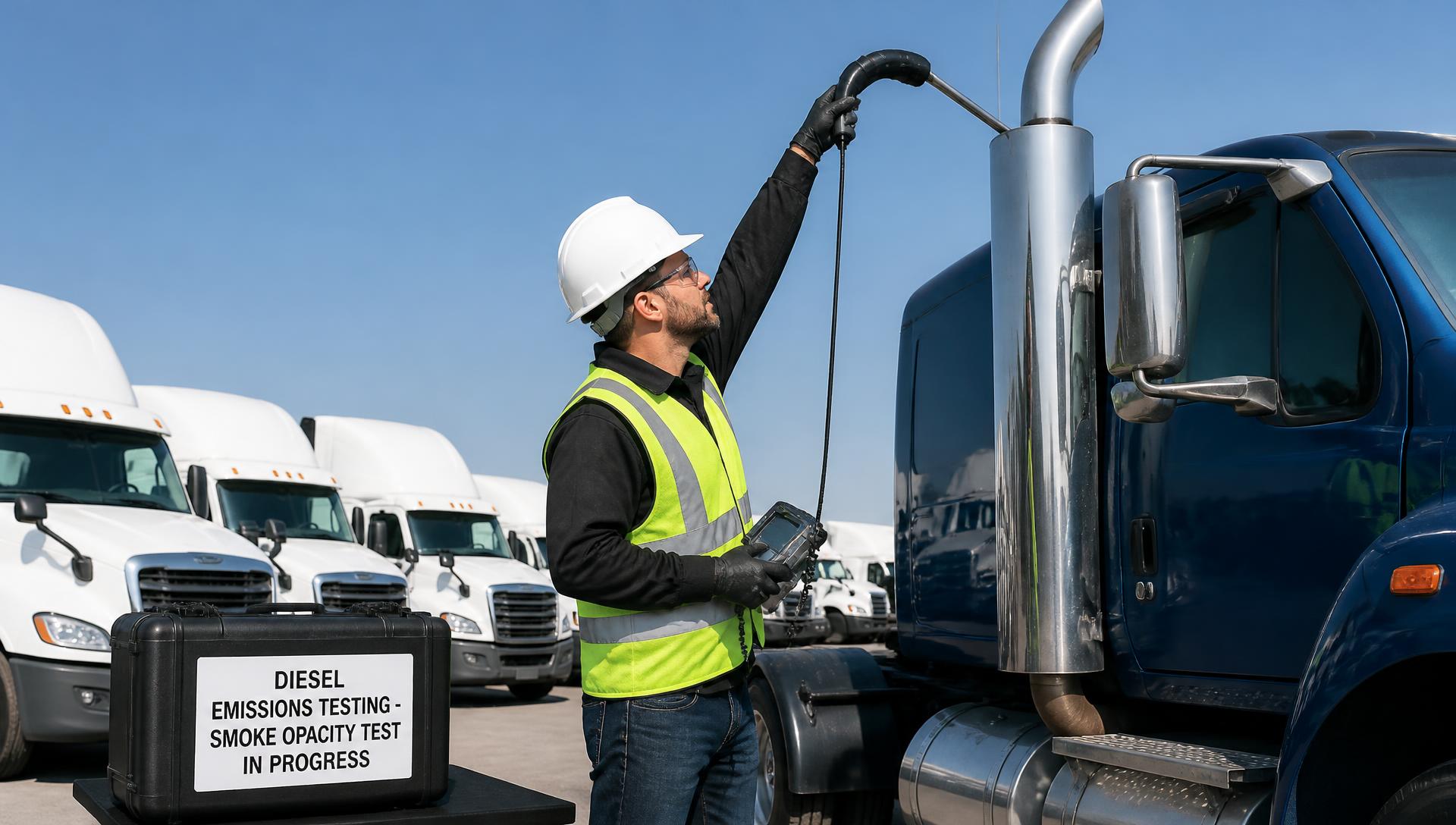
A smoke-opacity test uses an SAE J1667-compatible smoke meter during a prescribed snap-acceleration procedure to measure the opacity of diesel exhaust. For a Clean Truck Check opacity compliance test, the opacity test is accompanied by the Vehicle Emissions Control Equipment Inspection.
What an OBD Test Is
An OBD test is performed on site by connecting a computer to the vehicle's onboard diagnostic port and downloading the required emissions data directly to CARB. No smoke-opacity measurement is taken for an OBD test.
Which Vehicles Are Assigned Each Test
Diesel vehicles with 2012-and-older engine model years are generally assigned a smoke-opacity test and Vehicle Emissions Control Equipment Inspection. Diesel vehicles with 2013-and-newer engine model years are generally assigned an OBD test. Up in Smoke Smoke Testing performs both test types on site.
Some subject vehicles equipped with off-road engines may be assigned opacity and visual testing regardless of engine model year. The test type and due date shown in the vehicle owner's CTC-VIS account control.
Clean Truck Check generally applies to subject heavy-duty diesel and alternative-fuel vehicles with a gross vehicle weight rating over 14,000 pounds that operate on California public roads.
Alternative-fuel vehicles may be subject to a visual inspection but are not subject to the smoke-opacity portion of the test. Up in Smoke Smoke Testing does not market smoke-opacity testing to alternative-fuel vehicles.
How Often Testing Is Required
Vehicles subject to semiannual testing generally demonstrate compliance every six months. Qualifying agricultural vehicles and certain California-registered motorhomes may have annual testing requirements. Always use the test type and due date shown in CTC-VIS.
A passing test may generally be submitted up to 90 days before the assigned compliance deadline.
Out-of-State Vehicles
Vehicles registered outside California may still be subject to Clean Truck Check when operating on California public roads. The vehicle owner should review the vehicle's status and deadline in CTC-VIS.
What Happens During the Visit
The tester arrives at your location with the testing equipment and records the vehicle information.
For a vehicle assigned a smoke-opacity test, the tester performs the Vehicle Emissions Control Equipment Inspection and then takes the smoke-opacity measurement with an SAE J1667-compatible smoke meter during the prescribed snap-acceleration procedure.
For an OBD vehicle, the tester connects a computer to the vehicle's onboard diagnostic port and downloads the required emissions data directly to CARB.
The customer must have the vehicle present, safely accessible and at normal operating temperature before the scheduled test. The tester confirms that the vehicle is ready before beginning the procedure.
- Vehicle present at the scheduled time
- Vehicle safely accessible to the tester
- Engine at normal operating temperature
- Sufficient fuel on board
- Exhaust outlet clear and unobstructed
- Known engine or emissions-system problems disclosed
What Information the Customer Must Provide
We use the information shown in the vehicle owner's CTC-VIS account to confirm the assigned test type and due date. Please have the following ready before scheduling.
- Vehicle VIN
- Vehicle registration state
- Vehicle year
- Engine model year
- Fuel type
- GVWR
- CTC-VIS test type
- CTC-VIS due date
- Screenshot or copy of the CTC-VIS test-details page when available
- Testing address
- On-site contact
After the Test
When the test is performed as a Clean Truck Check compliance test by an active credentialed tester, the required test information is submitted through the tester's CTC-VIS account.
Test documentation is provided for your records. Testing does not include repairs, government fees or a guarantee that a vehicle will pass or remain compliant.
We cannot determine a vehicle's legal obligations solely from its appearance, vehicle year or customer description.